

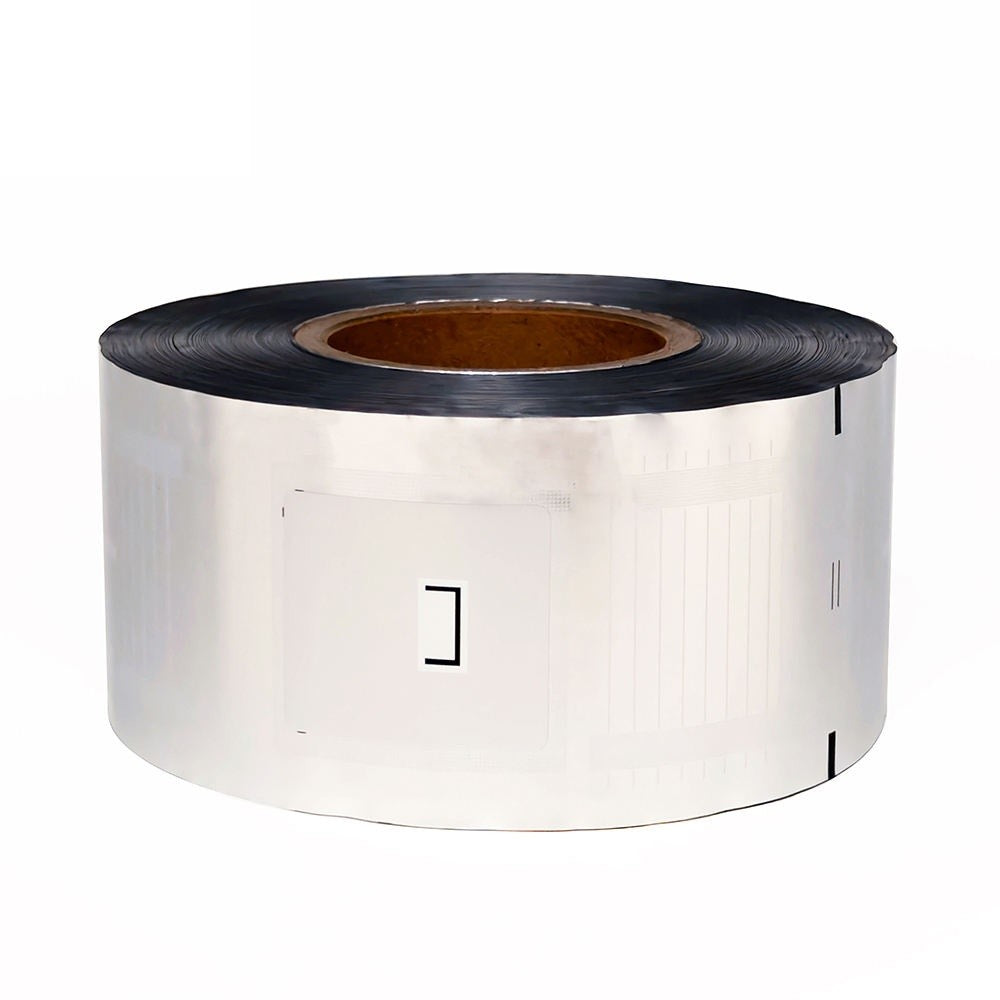
High-Barrier Resealable Liner Film - Peel & Reseal Moisture Barrier
Resealable liner film is the high-barrier layer that keeps working after the pack has been opened. A standard liner protects the pack once; a resealable liner pairs the barrier with a controlled closure, so the pack can be opened and closed again and the contents stay protected between uses.
It is specified where shelf life after opening is the real requirement: coffee and dry foods, powdered drinks, snacks and other products that are consumed over days or weeks rather than in one sitting.
Key Features
- Barrier that survives opening — the foil laminate keeps blocking moisture, oxygen and light after the pack has been resealed
- Controlled closure — a flap or peel-and-reseal strip; opening force and reseal force are balanced against your pack
- Aroma retention — the specification for products sold on smell
- Structure and thickness — structure and thickness are matched to your product and filling line (PET/AL/PE and PET/VMPET/PE laminates available).
- Barrier performance — verified per project; test reports available on request.
- Food-contact materials — food-contact compliant materials; declarations and certificates provided on request.
- Supplied as roll stock — roll width, core size and roll diameter are produced to your specification.
What it protects against
- Air and moisture between uses
- External odours
- Spillage, dust and lint contamination
How the closure is chosen
A resealable liner uses a more complex construction than single-use foil, typically combining a barrier foil with an adhesive strip or a reinforcement so the closure survives handling. The closure has to hold on the first pull and keep holding through repeated opening. Liner structure, flap position and closure are set against your pack format and filling line — send us the pack dimensions and we will confirm the build.
How to specify it
Send the product, the pack dimensions and your target shelf life. We will recommend a structure and a closure, provide a sample and quote. MOQ and lead time are confirmed at quotation; free samples, 3-5 working days.
Pricing is available on inquiry — MOQ varies by structure.
High-barrier foil liner — typical industry reference
The figures below are typical industry reference values for this product category. They are not measured values for your order. The final construction is specified together with your engineers against your pack format, your printing and your packing line.
| Basic construction | Liner base paper + laminating adhesive + aluminium foil + ink |
| Base paper grammage | Typically 50–90 g/m² |
| Aluminium foil thickness | Typically 0.006–0.009 mm |
| Roll width | Typically ~114 mm; other widths slit to your packing line |
| Laminating adhesive | Wet laminating adhesive (acrylic emulsion) or dry laminating adhesive (polyurethane / polyester / acrylic with hardener and thinner) |
| Converting route | Laminating → printing → embossing → slitting |
| Supply format | Rolls, slit to width, wound on a core |
Typical converting route
- Laminating — base paper bonded to aluminium foil, wet or dry; wound into a log and then slit into rolls.
- Printing — brand colour, text and handling marks on the paper side.
- Embossing — pattern embossing, including the gold and red metallized look used on premium packs.
- Slitting — to the width your packing line takes, with controlled tension and a flat roll face.
Measured properties that decide whether it runs
- Moisture and curl control — the base paper takes on and gives off moisture; that is the main cause of curl, winding creases and web breaks.
- Solvent residue — ink and adhesive solvents have to be driven off. The reference test method is headspace gas chromatography–mass spectrometry (HS-GC/MS).
- Ink heat resistance — the printed layer has to survive the heat it meets on the packing line.
- Runnability — slit width, roll face flatness and roll hardness decide how the liner feeds and forms on the machine.
- Width and grammage — width measured with a tool accurate to at least 0.1 mm; grammage weighed on a balance accurate to 0.001 g; D65 brightness read on a whiteness meter.
Standards and compliance
The category's former national standard was withdrawn in 2025 and no direct replacement has been issued. This product is therefore made to our internal control standard together with the applicable food-contact regulations. Food-contact declarations and a solvent-residue (HS-GC/MS) test report are provided on request.
Request a liner quotation
Tell us the pack, the structure and the roll you need. Our engineers reply with a specification and a quotation — usually within 24 hours.
Pricing available on inquiry — MOQ varies.